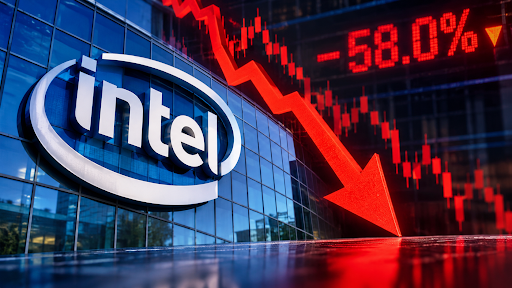
A dramatic decline in Intel shares raises fresh concerns about inflated technology valuations, AI-driven speculation, and the risks facing investors.
Intel's recent stock market collapse is drawing comparisons to the dot-com crash of 2000, raising questions about the sustainability of the artificial intelligence boom and the potential risks associated with rapidly rising technology valuations.
According to Yahoo Finance, Intel shares experienced a staggering 58% peak-to-trough decline over just 30 trading sessions, surpassing the approximately 53% drop recorded during a similar period in 2000. Since reaching its June peak, the semiconductor giant has lost approximately $460 billion in market capitalization, highlighting how quickly investor confidence can shift.
Earlier this year, Intel benefited from growing enthusiasm surrounding artificial intelligence, as investors anticipated significant demand for advanced computing technology and data center infrastructure. However, the company's disappointing fourth-quarter revenue forecast, combined with weakening personal computer demand, triggered a sharp reversal in its stock price.
The decline comes amid broader volatility across the technology sector, with investors increasingly questioning whether elevated AI-related valuations can be supported by corporate earnings and long-term profitability.
The similarities to the dot-com era have renewed discussions about speculative market behavior. During the early 2000s, enthusiasm surrounding internet technology pushed many stock valuations to extraordinary levels before a widespread market correction erased substantial investor wealth. Although today's technology companies operate in a different financial environment, Intel's recent performance illustrates the risks associated with high expectations and concentrated investments.
For investors, the downturn highlights the importance of understanding market exposure and evaluating diversification strategies. Physical precious metals, including gold and silver, are often considered as part of broader diversification discussions during periods of economic uncertainty, although they remain subject to their own market risks.
While Intel's decline does not necessarily signal another technology bubble bursting, it serves as a reminder that even established companies can experience significant losses when market expectations change.
Sources:
Yahoo Finance,
Reuters,
Yahoo Finance
This article is provided for informational and educational purposes only and should not be considered financial, investment, or tax advice.