Market Watch: Ray Dalio Sounds the Alarm on U.S. Debt and Calls for Gold

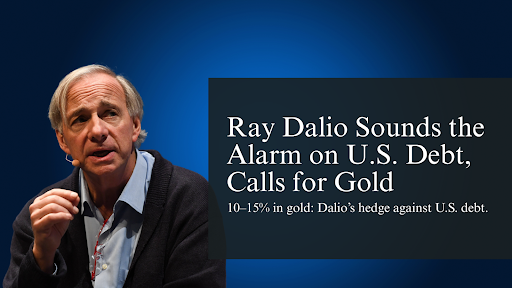
Ray Dalio is one of the world’s most influential investors and the founder of Bridgewater Associates, the world’s largest hedge fund. Known for his macroeconomic insights and data-driven approach, Dalio has built a reputation for predicting major market cycles — including the 2008 financial crisis. When he issues a warning, investors tend to listen.


Dalio recently cautioned that rising U.S. government debt and interest obligations are pushing the financial system toward what he calls a potential “financial heart attack.” (reuters.com)


As part of his prescription, Dalio recommends investors allocate 10–15% of their portfolios to gold, arguing that non-fiat stores of value like gold become essential when traditional assets and currencies face stress. (reuters.com)


Bridgewater’s recent moves reflect this stance. In the first quarter of 2025, the hedge fund cut its holdings of the SPDR S&P 500 ETF (SPY) by roughly 59–60%, reducing its weight in the firm’s publicly disclosed U.S. equity portfolio from around 22.1% to 8.7%. (benzinga.com)


At the same time, Bridgewater increased its exposure to GLD (SPDR Gold Trust) and shifted allocations toward international and emerging market assets, a sign the firm is actively hedging against U.S. equity market concentration and potential dollar weakness. (benzinga.com)


RSG Market Watch Takeaway

When one of the most respected investors in the world warns about systemic risk, and backs it up with bold portfolio moves,  it’s a signal worth paying attention to. Allocating 10–15% of your portfolio to gold can provide ballast when equities and fiat currencies come under pressure. Precious metals like gold and silver have historically helped investors preserve purchasing power during periods of high debt, inflation, and market turbulence. Including physical metals in your portfolio can add stability and help you prepare for what may be a new era of financial volatility.

A passenger jet flies past a tall airport control tower under a cloudy sky.
November 18, 2026
Recent disruptions affecting air travel, major banks, and technology services highlight vulnerabilities in critical systems and the importance of financial preparedness and diversification.
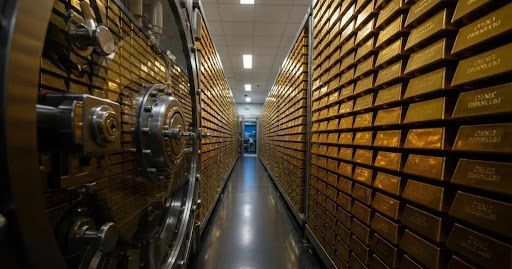
A narrow, dimly lit archive corridor lined with rows of golden storage boxes and large mechanical vault wheels.
November 18, 2026
The World Gold Council reported that central banks disclosed net purchases of 61 metric tons in September, the highest monthly reported total of 2026.
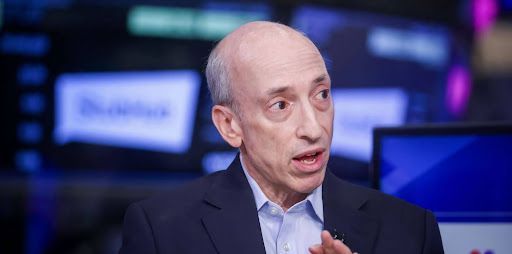
A bald man in a suit speaks in front of blue-lit screens at a broadcast studio.
November 18, 2026
Gary Gensler raises concerns over soaring artificial intelligence investments, mounting debt, and the possibility of an economic downturn comparable to the dot-com crash.
A passenger jet flies past a tall airport control tower under a cloudy sky.
November 18, 2026
Recent disruptions affecting air travel, major banks, and technology services highlight vulnerabilities in critical systems and the importance of financial preparedness and diversification.
A narrow, dimly lit archive corridor lined with rows of golden storage boxes and large mechanical vault wheels.
November 18, 2026
The World Gold Council reported that central banks disclosed net purchases of 61 metric tons in September, the highest monthly reported total of 2026.

A bald man in a suit speaks in front of blue-lit screens at a broadcast studio.
November 18, 2026
Gary Gensler raises concerns over soaring artificial intelligence investments, mounting debt, and the possibility of an economic downturn comparable to the dot-com crash.
A passenger jet flies past a tall airport control tower under a cloudy sky.
November 18, 2026
Recent disruptions affecting air travel, major banks, and technology services highlight vulnerabilities in critical systems and the importance of financial preparedness and diversification.
A narrow, dimly lit archive corridor lined with rows of golden storage boxes and large mechanical vault wheels.
November 18, 2026
The World Gold Council reported that central banks disclosed net purchases of 61 metric tons in September, the highest monthly reported total of 2026.