


Major Shifts Hit the Paper Silver Market
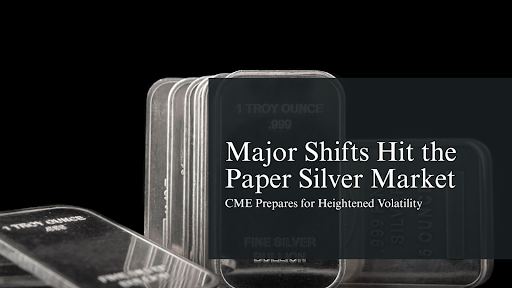
The structure of the U.S. paper-silver futures market is undergoing a notable transformation, and it is happening fast. On January 13, 2026, two major changes took effect at the CME Group that together signal a fundamental shift in how silver is traded on COMEX, particularly as retail participation accelerates.
Taken collectively, these developments suggest the exchange is positioning itself for a period of elevated volatility and the potential for a retail-driven surge in silver trading activity.
1. CME Launches New 100-Ounce Silver Futures Contract
On January 13, 2026, CME Group announced plans to introduce a new 100-ounce silver futures contract, trading under the symbol /SIC, with a scheduled launch date of February 9, 2026, pending regulatory approval.
This contract dramatically lowers the barrier to entry for participation in silver futures markets. Historically, standard COMEX silver contracts represent 5,000 oz. of silver, a size that has largely limited access to institutional traders and well-capitalized participants. The new 100-ounce contract creates a more accessible entry point for retail traders, sitting between micro contracts and full-sized futures.
“With silver in high demand, we are pleased that CME Group is expanding its smaller-sized offerings,” said Isaac Cahana, CEO of Plus500US. “This new contract will make it easier than ever for our global customers to capture silver opportunities in a flexible, cost-effective way.”
The launch follows record retail participation in metals markets throughout 2025, reflecting growing interest in silver amid inflation concerns, geopolitical uncertainty, and heightened price volatility.
2. CME Implements an Anti-Squeeze Margin Structure
Effective January 13, 2026, under CME Notice #26-019, CME Group transitioned precious metals futures, including silver, away from fixed dollar margin requirements and toward a percentage-of-notional-value margin system.
Under the new framework:
- Initial and Maintenance Margins are now set at approximately 9.0%–9.9% of the contract’s notional value
- Margin requirements automatically rise as silver prices increase
Because futures are leveraged instruments, traders are not simply trading the price of silver — they are controlling a specific quantity of metal. The notional value represents the total dollar value of that exposure.
In the event of a sharp price increase, for example, a move toward $100+ per oz., margin requirements would expand rapidly, forcing participants to post significantly more capital. This change functions as an anti-squeeze mechanism, designed to reduce excessive leverage and stabilize the market during extreme price moves.
What This Means for Precious Metals Diversification
These structural changes highlight an important distinction between paper silver exposure and precious metals diversification within a broader portfolio.
As futures markets evolve to accommodate increased retail participation and heightened volatility, they also introduce greater complexity, leverage risk, and capital requirements. For many investors, this reinforces the role of precious metals as a long-term diversification tool rather than a short-term trading vehicle.
Gold and silver have historically been used to:
- Hedge against inflation and currency debasement
- Reduce overall portfolio volatility
- Provide diversification away from equities and bonds
In particular, gold has continued to serve as the core stabilizing asset within the precious metals complex, while silver often plays a more opportunistic role, offering higher volatility and potential upside tied to both monetary and industrial demand.
The recent CME changes underscore why diversification across asset classes, and within precious metals themselves, matters. Structural shifts in paper markets can influence price behavior, liquidity, and volatility, but they do not change the underlying characteristics that have made physical precious metals relevant across economic cycles.
Looking Ahead
By expanding access on one side and tightening risk controls on the other, CME Group appears to be preparing for a silver market defined by greater participation and sharper price movements.
Whether these changes ultimately temper volatility or simply reshape how it manifests, they represent a meaningful evolution in how silver is traded — and a reminder that market structure matters just as much as market sentiment.
Disclaimer
This article is provided for educational and informational purposes only and does not constitute financial, legal, or tax advice. Futures contracts and precious metals involve risk, and past performance is not indicative of future results. Red State Gold Group does not provide personalized financial advice. Readers should conduct their own research and consult with qualified professionals before making any financial decisions.