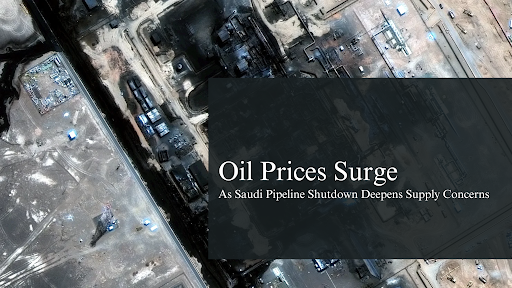
Oil prices are climbing again as escalating conflict in the Middle East threatens some of the world’s most important energy supply routes.
Crude prices jumped more than 2% after Saudi Arabia shut down its critical
East-West oil pipeline following multiple drone attacks. The pipeline is particularly important because it allows Saudi crude to reach the Red Sea while
bypassing the Strait of Hormuz, where shipping has already been severely disrupted by the ongoing conflict involving Iran.
The Strait of Hormuz is one of the most important energy chokepoints in the world. According to the International Energy Agency, approximately
20 million barrels of oil per day passed through the strait in 2025, representing roughly 25% of global seaborne oil trade. With traffic through Hormuz under pressure, Saudi Arabia’s East-West pipeline had become an increasingly important alternative route.
Another Major Supply Route Under Pressure
The shutdown raises concerns because Saudi Arabia could have fewer options for getting its oil to international markets if disruptions continue.
Traders and industry sources estimate that if the pipeline does not resume operations quickly, as much as
4% of global oil supply could ultimately be at risk. Saudi Arabia reportedly has only several days of export inventories stored at the Red Sea port of Yanbu, increasing the importance of restoring pipeline operations.
The situation is being compounded by additional instability across the region. A vessel in the Strait of Hormuz was struck by a projectile over the weekend, while Iran-aligned Houthi forces have intensified attacks affecting Saudi Arabia and strategic areas around the Red Sea.
Diplomatic efforts have also suffered a setback. A meeting between Iran and Gulf Arab states that was expected to address the situation in the Strait of Hormuz was postponed following the pipeline attack.
Why This Matters
The immediate concern extends well beyond the oil market. A prolonged disruption to global energy supplies could keep oil and fuel prices elevated, increasing transportation and production costs and adding further pressure to inflation.
Higher inflation can also complicate the Federal Reserve’s decisions on interest rates, while continued geopolitical instability and rising energy costs could contribute to greater volatility across financial markets.
For Red State Gold, the latest developments highlight how quickly geopolitical events can create ripple effects throughout the global economy. With major energy routes under pressure, oil prices elevated and uncertainty surrounding inflation and financial markets, some individuals may look beyond traditional financial assets as they consider ways to diversify and prepare for changing economic conditions.
Physical gold and silver are among the tangible assets buyers have historically considered during periods of heightened geopolitical and economic uncertainty.
Source:
CNBC
Red State Gold Group is a precious metals dealer and does not provide financial, tax, or investment advice.