

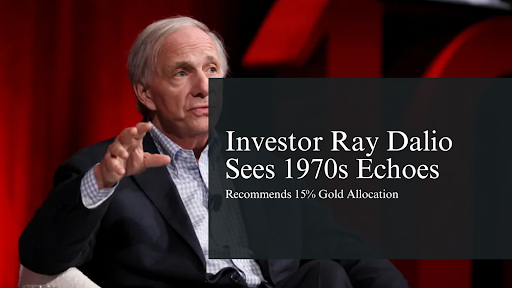
Dalio Sees 1970s Echoes — Recommends 15% Gold Allocation

Billionaire investor Ray Dalio recently drew a striking parallel between today’s economic climate and the early 1970s, arguing that mounting debt, inflation pressures, and weakening faith in paper assets make gold more essential than ever. (CNBC via MarketWatch)


Dalio’s Thesis & Recommendation

  • Dalio described today’s environment as “very much like the early ’70s,” when confidence in currencies and debt instruments deteriorated.(MarketWatch)

  • He urged investors to consider allocating around 15 % of their portfolios to gold, citing its historical strength as a diversifier—one asset that tends to perform well when equities or bonds falter.(Investopedia)

  • Dalio warned that when so much of the market depends on credit, debt, and monetary policy, gold offers rare independence: you don’t rely on someone else to “pay” you.(MarketWatch)

What Others Are Saying

  • Several advisors consider 15 % a bold stance. Some caution it may be too aggressive given that gold doesn’t produce income (dividends or interest).(MarketWatch)

  • Traditional strategic allocations often limit gold and alternatives to 2-5 %, rather than double digits.(MarketWatch)

Why This Matters Now

With gold already rallying and macro risk elevated, Dalio is signaling that what’s unfolding is more than a short-term trade. His call underscores the narrative that the financial system is vulnerable, and that a well-placed real-asset allocation may be one of few effective hedges in this regime.


This article summary is provided for informational purposes only and should not be considered financial or investment advice. Always consult with a qualified financial advisor before making investment decisions.

Sources: CNBC, Investopedia

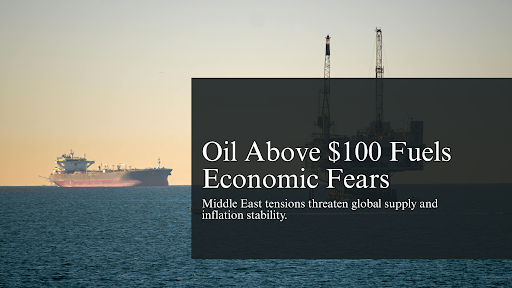
Oil tanker at sea beside news headline: “Oil Above $100 Fuels Economic Fears”
October 19, 2026
Disruptions in the Strait of Hormuz and uncertainty over Russian exports raise concerns about inflation and economic stability.

Blue stock market graphic with headline, “$2 Trillion Wiped From Chip Stocks,” on a dark background
October 19, 2026
Billions in market value erased as rising interest rates and mounting AI debt expose vulnerabilities in the stock market.
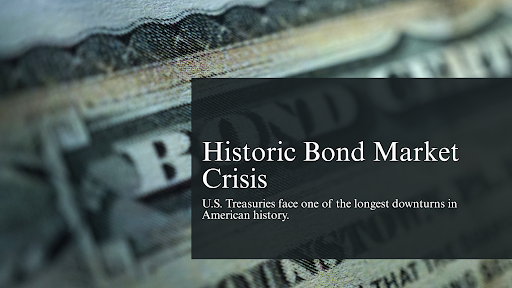
Newspaper-style graphic reading “Historic Bond Market Crisis” over a close-up of U.S. currency
October 19, 2026
America's second-longest bond market downturn raises concerns over retirement savings, inflation, and economic stability.
Show More
Oil tanker at sea beside news headline: “Oil Above $100 Fuels Economic Fears”
October 19, 2026
Disruptions in the Strait of Hormuz and uncertainty over Russian exports raise concerns about inflation and economic stability.
Blue stock market graphic with headline, “$2 Trillion Wiped From Chip Stocks,” on a dark background
October 19, 2026
Billions in market value erased as rising interest rates and mounting AI debt expose vulnerabilities in the stock market.
Newspaper-style graphic reading “Historic Bond Market Crisis” over a close-up of U.S. currency
October 19, 2026
America's second-longest bond market downturn raises concerns over retirement savings, inflation, and economic stability.
Show More
Oil tanker at sea beside news headline: “Oil Above $100 Fuels Economic Fears”
October 19, 2026
Disruptions in the Strait of Hormuz and uncertainty over Russian exports raise concerns about inflation and economic stability.
Blue stock market graphic with headline, “$2 Trillion Wiped From Chip Stocks,” on a dark background
October 19, 2026
Billions in market value erased as rising interest rates and mounting AI debt expose vulnerabilities in the stock market.
Show More